2013. március 26., kedd

"I'm so hungry, I could eat a Hippogriff..."

They see me Rowling, they eatin'...
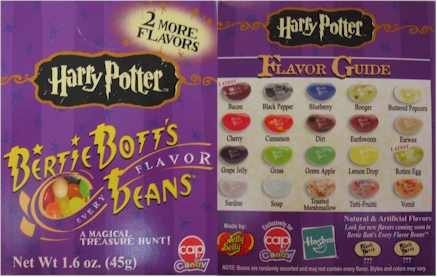
HP food in real life

The journey of this blog has come to an end. It began with A Hobbit's Adventure and how else should it end than in a magical journey? I believe I looked that some examples of the most prominent English writers of their time and without a doubt, one of today's top writers is J. K. Rowling.

What makes Rowling unique? "Rowling has led a "rags to riches" life story, in which she progressed from living on state benefits to multi-millionaire status within five years. She is the United Kingdom's best-selling author since records began, with sales in excess of £238m.[12] The 2008 Sunday Times Rich List estimated Rowling's fortune at £560 million ($798 million), ranking her as the twelfth richest woman in the United Kingdom.[13] Forbes ranked Rowling as the forty-eighth most powerful celebrity of 2007,[14] and TIME magazine named her as a runner-up for its 2007 Person of the Year, noting the social, moral, and political inspiration she has given her fans.[15] In October 2010, Rowling was named the "Most Influential Woman in Britain" by leading magazine editors.[16] She has become a notable philanthropist, supporting such charities as Comic Relief, One Parent Families, Multiple Sclerosis Society of Great Britain and Lumos (formerly the Children's High Level Group)." (http://en.wikipedia.org/wiki/J._K._Rowling)

In addition, Forbes magazine declared her to be the first dollar-billionaire earning money from writing.

What is Rowling's writing style then? What makes her a great writer? Is it only the story?
Let's face it, there's a lot we can take away from Rowling as a writer. Or rather as a person. Let's have a look at what Michelle Rafter thinks about her. (http://michellerafter.com/2012/09/27/10-things-j-k-rowling-taught-me-about-writing/):

1. Persistence counts.
2. Think things through.
3. If the story’s good enough, the writing can be secondary.
4. Go for it.
5. Write when you’re on.
6. Don’t be afraid to make things complicated.
7. Leave stuff out.
8. Write what you love.
9. Be good to your people.
10. It’s OK to goof off.


My personal favourite is no. 10:

After she gave up cigarettes, Rowling took up Minesweeper, the game that comes bundled with Windows, when she needed a writing break. She got so good she even brags on her blog about her expert-level times.
The takeaway: If Rowling can play mindless computer games for a little mental R&R, it’s OK if you check Twitter or Facebook during the work day.

 Naturally, these points will be always up to debate. Language-wise, most bloggers agree in the following:

"J.K. Rowling is a fantasy author. There are several items that distinguish her from other writers, such as making up her own words, creatures, and spells; using Latin words as spells (for most of the spells); using contemporary events for ideas for her Harry Potter series (the war against Voldemort was most likely based on the war against terror, due to their similarities); and her knack for making up the most unusual names (like Mundungus, Dorcas, Tiberius, etcetera)." (http://answers.yahoo.com/question/index?qid=20080809115703AATQQmX)

The remaining question now is... What do people eat in the Harry Potter books? A comment on the internet I particularly liked is the following: "In one of her many interviews, JKR said that wizards generally live longer than Muggles. After a thorough research about food in the Harry Potter universe and, above all, its magical part, the only possible conclusion is that wizards don't have problems with cholesterol, otherwise their life span would be considerably shorter than that of the average Muggle."

It made me even more curious, so let's look at food now.

"Pumpkin juice seems to be the only drink, water is never mentioned for meals (although Harry had a drink of water when he woke up in the middle of the night).

Roast beef, roast chicken, fried sausages, stew, casserole, tripe (which McGonagall ironically offers Trelawney in PA), pork chops, shepherd's pie, steak, Cornish pasties, lamb chops, sausages, bacon and steak, steak and kidney pudding, steak and kidney pie, black pudding, sandwiches (chicken and ham, for Harry and Ron in CS5); bread, marshmallows and crumpets (Harry and Ron roast them over the common room fire during the Christmas holidays in PS12), baked pumpkin (at Halloween), roast potatoes, jacket potatoes, boiled potatoes, mashed potatoes, chips, Yorkshire pudding, peas, sprouts, carrots, gravy, ketchup, custard tart, mint humbugs, ice cream, apple pies, treacle tart, spotted dick, chocolate éclairs, chocolate gateau, jam doughnuts, trifle, strawberries, jelly, and rice pudding. An impressive list of heavy, traditional British food. Only in GF14, when the delegations from Beauxbatons and Durmstrang arrive, two non-British dishes appear on the tables: Bouillabaisse and "some kind of strange blancmange".
Breakfast is a little healthier, it becomes more understandable, though, why the students mostly sleep in Professor Binns' classes: porridge, rolls, orange juice, kippers, eggs and bacon, toast, buttered toast with jam, corn flakes. Again, no fresh fruit, no yoghurt...
And then, there are of course the Christmas treats: turkey, chipolatas, thick rich gravy, cranberry sauce, turkey sandwiches (for tea), Christmas pudding, eggnogg, crumpets, trifle, Christmas cake. And when it gets really cold in the winter, the house-elves supply teachers and students with warming stews and savoury puddings - no wonder that Fleur Delacour criticizes "zis 'eavy 'ogwarts food", which might also be regarded as evidence by an objective witness that not only Harry is giving us a comprehensive view, but also that identical food is served at least at the Ravenclaw and the Gryffindor tables." (http://www.hp-lexicon.org/essays/essay-food.html)

After finding out all these information, let's try to recreate magic:

Renard Brothwell was nervous. That was his first ever chocolate frog. He was standing between Cowell's Clothily Clothes Shop and Delicious Dave's Delightful Desserts confectionery. His family was a bit out of place in Diagon Alley. His parents were muggles and he had only received his Hogwarts letter a week ago. He looked around to see what to do. His father was drinking a Fire whiskey, while his mom was gulping Butterscotch. They urged him to open the box. He did and unexpectedly, the chocolate frog flew out of the box, seeing its chance to flee. Renard acted quickly, drew his wand (performing illegal under age magic) and shouted "Exfroggiliano!", the freezing spell he just saw in one of his books. Instantly, the frog stopped dead and was only moving its eye desperately trying to escape. However, there was no escape for him now. He became the first item of Renard's magical journey into wizarding confectionery, closely followed by the magical beans for which he developed quite a magical taste later. 


Sources:
http://www.hp-lexicon.org/wizworld/food.html
http://en.wikipedia.org/wiki/J._K._Rowling
http://michellerafter.com/2012/09/27/10-things-j-k-rowling-taught-me-about-writing/
http://answers.yahoo.com/question/index?qid=20080809115703AATQQmX
http://www.hp-lexicon.org/essays/essay-food.html
http://www.delish.com/recipes/cooking-recipes/harry-potter-food-recipes#slide-1 - further recipes
http://www.yumsugar.com/Top-10-Harry-Potter-Related-Recipes-383049


Brave New Food


"Hug me till you drug me, honey;
Kiss me till I'm in a coma;
Hug me, honey, snuggly bunny;
Love's as good as soma."


A short summary

Aldous Huxley's Brave New World poses a number of questions regarding freedom of choice, predestined futures, human knowledge and also, how food and pleasures are treated.

In order to better understand the underlying features, let's take a look at Huxley's life.

"Aldous Leonard Huxley (26 July 1894 – 22 November 1963) was an English writer and one of the most prominent members of the famous Huxley family. Best known for his novels including Brave New World and a wide-ranging output of essays, Huxley also edited the magazine Oxford Poetry, and published short stories, poetry, travel writing, film stories and scripts. Huxley spent the later part of his life in the United States, living in Los Angeles from 1937 until his death.
Aldous Huxley was a humanist, pacifist, and satirist, and he was latterly interested in spiritual subjects such as parapsychology and philosophical mysticism.[1][2] He is also well known for advocating and taking psychedelics.
By the end of his life Huxley was widely acknowledged as one of the pre-eminent intellectuals of his time." (http://en.wikipedia.org/wiki/Aldous_Huxley)

His most famous novel, entitled Brave New World is available here: http://www.idph.com.br/conteudos/ebooks/BraveNewWorld.pdf


So who we have is a thinker, interested in the paranormal, often taking drugs. Wouldn't it be nice if such an approach existed in his works? It does, let's have a look! (http://www.huxley.net/soma/somaquote.html)

"..there is always soma, delicious soma, half a gramme for a half-holiday, a gramme for a week-end, two grammes for a trip to the gorgeous East, three for a dark eternity on the moon..."

"you do look glum! What you need is a gramme of soma."  

"the warm, the richly coloured, the infinitely friendly world of soma-holiday. How kind, how good-looking, how delightfully amusing every one was! "

"The service had begun. The dedicated soma tablets were placed in the centre of the table. The loving cup of strawberry ice-cream soma was passed from hand to hand and, with the formula, "I drink to my annihilation," twelve times quaffed."

"I don't understand anything," she said with decision, determined to preserve her incomprehension intact. "Nothing. Least of all," she continued in another tone "why you don't take soma when you have these dreadful ideas of yours. You'd forget all about them. And instead of feeling miserable, you'd be jolly. So jolly,"  

A fan-made advertisement for this "marvellous" material:


Food, especially the drug soma, in Brave New World is used as a way of controlling people. 

By eating, people forget about their everyday struggles, they become free and part of a world that exists outside their heavily controlled thoughts and behaviour. 

You may wonder now, where Huxley got the idea from and/or where it lead to in our modern world.

 It seems that Huxley's fears became true in the form of genetically modified food and pills that can cure everything instantly.


The question is now how Huxley would describe today's food using the style of Brave New World? Here's my attempt:


The Beta was conditioning the Gamma PLUSes at the institution called the STANDARDIZING CENTRE. She did not enjoy it, nor did she dislike tutoring. She was chosen for this even before she was born. Along with her ninety-six identical twins, they did this all over the country. Their job was to ensure that all the Gammas hated literature, culture and creativity. She did it by teaching them everything they would never need, thus making information into undecipherable bits, that no one understood. After some years, nobody wanted to learn about new things They thought they would never understand it anyway. Some Gammas fell asleep sometimes during her lectures, but she only needed one button to wake them up. She pushed the button and immediately the screech came: A LECTURE A DAY KEEPS CULTURE AWAY. She did her job without emotions and the Gamma PLUSes did the same. For them, the standardizing centre was the same for 3 to 5 years. Some of them lost interest in 3 years, they were free to start working in the STANDARDIZED FEEDING CENTRES. For some students, for some unknown reasons, it took 5 years to perfectly eliminate all kinds of interest in knowledge and culture. They then became members of the STANDARDIZED PHOTOCOPYING AND COFFEE-MAKING DEPARTMENT. Finally, there were the Gamma PLUSPLUSes. She tormented them for 8 years without the slightest remorse. Their days were spent the same way. In the morning, they were woken up at 7 AM, were fed their genetically created nutrition, some cereal flavoured, some toast and butter flavoured and then attended her lectures. The day was punctuated by one more feeding, this time, they were given meal capsules. A capsule provided nutrition for the rest of the day and consisted of 3 meals that mixed with saliva gained their final taste, tomato soup, chicken with potato and yogurt. The recipe was from a person named Wonka, centuries earlier. Their final meal of the day was always looked forward to. They did not have any emotion towards it, but their body, this constantly ticking biological clock felt that soma was coming. They put it in their mouth and quickly swallowed it. The sensation took them to secret places in their minds and freed them for the rest of the day. One gramme was enough to fly to the Moon and two meant a roundtrip and a sleep for the rest of the day. All in all, hers was not the worst job. She always got the two grammes. After all, she did her job well. She created the perfect unified entities.


 The whole movie can be seen here:


Sources:

Beckett (Back at) the table

Pinter on Samuel Beckett (eating onion soup together once):


"Boil the beast” she said, “what else?”
   “But it's not dead” protested Belacqua “you can't boil it like that.”
   She looked at him in astonishment. Had he taken leave of his senses?
   “Have sense” she said sharply, “lobsters are always boiled alive. They must be.” She caught up the lobster and laid it on its back. It trembled. “They feel nothing” she said.
   In the depths of the sea it had crept into the cruel pot. For hours, in the midst of its enemies, it had breathed secretly. It had survived the Frenchwoman's cat and his witless clutch. Now it was going alive into scalding water. It had to. Take into the air my quiet breath.
   Belacqua looked at the old parchment of her face, grey in the dim kitchen.
   “You make a fuss” she said angrily “and upset me and then lash into it for your dinner.”
   She lifted the lobster clear of the table. It had about thirty seconds to live.
   Well, thought Belacqua, it's a quick death, God help us all.
   It is not."

Who's the author of this work? Why is he significant? How did he become so?

"Samuel Barclay Beckett (13 April 1906 – 22 December 1989) was an Irish avant-garde novelist, playwright, theatre director, and poet, who lived in Paris for most of his adult life and wrote in both English and French. His work offers a bleak, tragicomic outlook on human nature, often coupled with black comedy and gallows humour.
Beckett is widely regarded as among the most influential writers of the 20th century.[2] Strongly influenced by James Joyce, he is considered one of the last modernists. As an inspiration to many later writers, he is also sometimes considered one of the first postmodernists. He is one of the key writers in what Martin Esslin called the "Theatre of the Absurd". His work became increasingly minimalist in his later career.
Beckett was awarded the 1969 Nobel Prize in Literature "for his writing, which—in new forms for the novel and drama—in the destitution of modern man acquires its elevation".[3] He was elected Saoi of Aosdána in 1984." (http://en.wikipedia.org/wiki/Samuel_Beckett)


He was born on Good Friday, when Jesus left Earth. He only missed the birth of Jesus by dying two days earlier. Drawing on the fact that he employed religious items in his works, it would have been a great irony on his part to get the timing right. What a bummer.


What do we know about his literary style and/or approach?

"Beckett's writing can be roughly divided into three periods - his early works up until 1945; his middle period from 1945 until the early 1960s, during which he wrote his best known works and his late period from the early 1960s until his death in 1989 during which his style became more minimalist. His early works were greatly influenced by James Joyce, critics comment on their erudite nature appearing to overly display the writer's knowledge resulting in some obscurity. Beckett began writing in French during this period, he stated that writing in a language that was not his first tongue taught him discipline in economy of language and contributed to a sparsemess of style. In 1945, Beckett returned to Dublin for a brief visit, during his visit he had a revelation in which his entire future literary direction appeared to him, he documented this in his 1958 play Krapp's Last Tape. He returned to Paris and began his most prolific period as a writer, this was when he entered the second period of his writing. He turned definitively to the French language during his middle period and his work began to develop it's unique style moving some critics to claim Beckett as one of the forefathers of post-modernism. During his late period, Beckett whittled down the content of his work to the essential elements, works written during this period include Not I, Eh Joe, Play and Breath. Beckett's work more than any other broke form the realist tradition, dispensing with conventional plot, space and time and focussed on the essential elements of the human condition." 


Food in Beckett's famous works are relatively limited. There are two instances for it in waiting for Godot: "They cling to each other on an almost bare stage where the only sign of life is a skinny tree, and number of rocks; the only food they have is a dried up carrot. One tells the other that they must wait for Godot, despite the fact that they don't know who he is, or what he wants. And so they wait.", "Lucky carries a basket of food and a bottle of wine, neither of which is shared with the two tramps, who are starving." (http://www.nytheatre-wire.com/mc09052t.htm)


Now imagine the cooking of the lobster in the beginning in the style of Beckett's Endgame:


Simple kitchen interior.

Light emanating from the oven's light.

Left and right back, down low, two small burners, turned off, kitchen equipment.

Front right, a door. Hanging near door, its face to wall, a picture about fruits organized into a still-life.

Front left, touching each other, covered with an old sheet, two ashbins.One used for collecting recycles, the other is a simple bin.

Motionless by the door, his eyes fixed on the lobster, Beck's. Very red face.

Brief tableau.


Beck's goes and stands next to burner left. Stiff, staggering walk. He looks down at burner left. He turns and looks at burner right. He goes and stands next to burner right. He looks at burner right. He turns and looks at burner left. He goes out, comes back immediately with a small box of matches, carries it over and puts it down on the table next to burner left, gets one out and lights it. He moves on, takes six steps (for example) towards burner right, goes back for the matches, carries them over and puts it down on the shelf close to burner right, draws a match out, and lights burner right. Then takes some steps backwards and looks at the burners. Then goes to burner left, adjusts the level. Then goes to burner right and turns it a bit down. Burners are now even. He goes to door, halts, turns towards auditorium.


BECK'S (fixed gaze, tonelessly):
Finished, it's finished, nearly finished, it must be nearly finished.
(Pause.)
Heat upon heat, marker by marker, and one day, suddenly, the burners are even. If they can ever be even. I wonder.
(Pause.)
I can't be punished any more.
(Pause.)
I'll go now to fetch the lobster, one feet by one feet by half a feet, perfect size. I will just have to wait till it dies.
(Pause.)
Nice dimensions, nice proportions, I'll put it on the table, and look at the clock ticking, and wait for it to die.
(Pause.)
Aunt said something about boiling 'em alive. That would be just cruel. Anyway, what's the point of eating lobsters?
(Pause.)
I will just fetch a sandwich. He promised you the cooking of a lobster. I'll eat a sandwich. In a play anything can happen.
(He remains a moment motionless, then goes out. He comes back immediately, goes to burner right, turns it off. Pause. Goes to burner left, turns it off. He yawns. Takes out a sandwich from the fridge. Leaves room. Light fades. Curtains.)


Sources:

2013. március 25., hétfő

A Woolf at the kitchen table

"It is a curious fact that novelists have a way of making us believe that luncheon parties are invariably memorable for something very witty that was said, or for something very wise that was done. But they seldom spare a word for what was eaten. It is part of the novelist's convention not to mention soup and salmon and ducklings, as if soup and salmon and ducklings were of no importance whatsoever, as if nobody ever smoked a cigar or drank a glass of wine. Here, however, I shall take the liberty to defy that convention and to tell you that the lunch on this occasion began with soles, sunk in a deep dish, over which the college cook had spread a counterpane of the whitest cream, save that it was branded here and there with brown spots like the spots on the flanks of a doe. After that came the partridges, but if this suggests a couple of bald, brown birds on a plate you are mistaken. The partridges, many and various, came with all their retinue of sauces and salads, the sharp and the sweet, each in its order; their potatoes, thin as coins but not so hard; their sprouts, foliated as rosebuds but more succulent. And no sooner had the roast and its retinue been done with than the silent servingman, the Beadle himself perhaps in a milder manifestation, set before us, wreathed in napkins, a confection which rose all sugar from the waves. To call it pudding and so relate it to rice and tapioca would be an insult. Meanwhile the wineglasses had flushed yellow and flushed crimson; had been emptied; had been filled. And thus by degrees was lit, half-way down the spine, which is the seat of the soul, not that hard little electric light which we call brilliance, as it pops in and out upon our lips, but the more profound, subtle and subterranean glow which is the rich yellow flame of rational intercourse. No need to hurry. No need to sparkle. No need to be anybody but oneself. We are all going to heaven and Vandyck is of the company--in other words, how good life seemed, how sweet its rewards, how trivial this grudge or that grievance, how admirable friendship and the society of one's kind, as, lighting a good cigarette, one sunk among the cushions in the window-seat."
(A Room of One's Own)

Who is this woman, you may start wondering, who is this person who dares questioning the rightfulness of the inclusion of dinner parties in literary works due to their importance in the plot? On the other hand, why would it be so? Why do participants in parties and/or dinner parties always have to be witty? Why aren't they just as dull as many people and relatives we ask to visit us?


"Adeline Virginia Woolf (/ˈwʊlf/; 25 January 1882 – 28 March 1941) was an English writer, and one of the foremost modernists of the twentieth century.
During the interwar period, Woolf was a significant figure in London literary society and a central figure in the influential Bloomsbury Group of intellectuals. Her most famous works include the novels Mrs Dalloway (1925), To the Lighthouse (1927) and Orlando (1928), and the book-length essay A Room of One's Own (1929), with its famous dictum, "A woman must have money and a room of her own if she is to write fiction." (http://en.wikipedia.org/wiki/Virginia_Woolf)

Although her life is very interesting for those craving for data and facts, it is her writing style that has some interesting features:

" In Mrs Dalloway, all of the action, aside from the flashbacks, takes place on a day in June. It is an example of stream of consciousness storytelling: every scene closely tracks the momentary thoughts of a particular character. Woolf blurs the distinction between direct and indirect speech throughout the novel, freely alternating her mode of narration between omniscient description, indirect interior monologue, and soliloquy.[3] The narration follows at least twenty characters in this way but the bulk of the novel is spent with Clarissa Dalloway and Septimus Smith.
Because of structural and stylistic similarities, Mrs Dalloway is commonly thought to be a response to James Joyce's Ulysses, a text that is often considered one of the greatest novels of the twentieth century (though Woolf herself, writing in 1928, apparently denied this[4]). In her essay "Modern Fiction," Woolf praised James Joyce's Ulysses, saying of the scene in the cemetery, "on a first reading at any rate, it is difficult not to acclaim a masterpiece."[5] The Hogarth Press, run by her and her husband Leonard, had to turn down the chance to publish the novel in 1919, because of the obscenity law in England, as well as the practical issues regarding publishing such a substantial text." (http://en.wikipedia.org/wiki/Mrs_Dalloway#Style)

Now that we know more about her writing style, the question is: What did people eat in this period?

"Eating was an event in the wealthy Victorian home. Even the breakfast meal featured a variety of fruits, scones, omelettes, bacon and more. 
From the daily ritual of serving afternoon tea and the opportunity to show off the lady's finest silver, china and linen, to 
elaborate banquets attended by noblemen and their guests, there was always something on the stove in a Victorian kitchen.
In reality, the Victorian menu wasn't terribly different from what is served in homes today, or at least in the homes where someone still cooks. Meat, fish and poultry were common and fresh or canned vegetables were served with most meals. Winter and Autumn meals usually included hearty soups and stews while chicken and lighter dishes prevailed in the summertime.
Holiday meals were special celebrations and called for the finest dishes including Roast Mutton, Pork or Turkey, Boiled Beef, Stewed Rabbits, Plum Pudding and Mince Pies. Baked good were plentiful and cooks were especially prized for their dessert-making skills.
Most evening meals were served in courses with raw or baked Oysters a popular appetizer. The second course featured cream soups or plain bouillon along with a serving of baked or broiled fish.
The main course, usually roasted poultry, pork or beef, accompanied by a variety of savory vegetables, fresh baked bread, and frequently some pasta, was presented by the serving maid in grand fashion and to the great delight of those seated around the table.
The dessert course featured several puddings, cakes and highly prized specialities such as Nesselrode and Plum Pudding. Of course a variety of cheeses and fresh fruit were often served when available.
Wine would be served at the end of each course. Madeira and sherry after. A glass of hock after white fish or claret and port after salmon. Following entrees chilled champagne, a favourite with the ladies, might be served." (http://www.thecooksguide.com/articles/food-and-drink.html


After all these, imagine Mrs. Woolf preparing for a big Sunday dinner party and making the last-minute preparation:

She's done everything she could. At that exact moment, she was feeling as if she travelled back to her childhood years. Her mom was giving the room a sweeping look, walked up to the table and carefully adjusted the table cloth just as she learned from her mother many years ago. She did the same thing. Walked over to the next spot and did it again. And again. She finally thought everything was in its place, so went out to the kitchen and looked around what was to be done. The turkey was eyeballing her carefully. She thought back to her childhood in the barn. Some years ago, she thought not having a calendar makes it awfully difficult to remember, I was running around my mother. My mother served as a nice dinner last time for the Woolfs. She did not like them on second thought. Of course, seeing that she was already cooked, it did not make a difference. She walked on and looked at the oysters. It was her son's favourite part of the meals. The appetizer. The idea of spreading the oyster on freshly made toasts gives him joy whenever he thought about it. I am not sure if it is the sight of the changing form or the fact that whenever I think about tasting it, I drool. She did not know either what is so joyful about it. The champagne, next to the bowl was a different story. He, her husband, loved it. What pleasure opening a bottle causes me. The anticipation I felt at my father's side during Christmas can't be even described. The countdown and the excitement until the stopper leaves the bottle, while champagne is spurting out on top. She did not like it. The new chandelier did not like the idea either. The stopper already scratched me last time when it went amok flying. That crazy stopper, I can still see it behind the drawer where it flew. Of course, she'll never find it. Ohh, the plum pudding. She just loves it. The sight and the smell. Delightful. Mrs. Wattson is just dying to find out all about the recipe. I will have to ask Mrs. Woolf and beg her to tell me the recipe, Otto just lives it. Of course, she won't tell me. Mrs. Woolf knew that she should not. It took her years to master it. That was the only dessert I could master. I struggled with all the other. That should be one of the things I will take to the grave with me. She looked around the kitchen and smiled. The thought of having a great party and not telling the secret always made her smile. The chandelier, the turkey, and the pudding watched her carefully. The last two knew it was their final moment in this world. Only the bottle stopper smiled. Nobody will ever move the drawer, I think.


Finally, an interesting fact from Mae's Food blog:

"Virginia Woolf was very dependent in her earlier life for servants to cook for her and even coax her to eat. (This had to do with her mental problems, which included various eating disorders, treated at length in the book.) My usual approach would be to ask What did Virginia Woolf eat? or What did she cook? The book also answers them in fascinating ways. As her life went on, she seemed to question her relationship with servants, and she became more interested in learning to cook, which was also a very interesting thing:
"Over the years she graduated to making soups, pies and roasts, rice pudding, curry; sometimes she'd rustle up a scratch supper -- 'macaroni cheese and bacon fry' -- baked haddock was a favourite standby." (p. 233)"

Sources:
http://leitesculinaria.com/10550/writings-virginia-woolf-at-the-table.html - Recipes
http://akitchenofonesown.blogspot.co.uk/2009/01/virginia-woolf-on-food.html
http://en.wikipedia.org/wiki/Mrs_Dalloway#Style 
http://maefood.blogspot.co.uk/2009/01/virginia-woolfs-kitchen.html
http://en.wikipedia.org/wiki/Virginia_Woolf

2013. március 19., kedd

MilkShakespeare


(Twelfth Night - Act 1, Scene 1)

Although Shakespeare is probably most well known for the plays he produced, this blog will attempt to write about food in the style and meter of his sonnets. In order to better understand both, some background knowledge is necessary.

First of all, let's take a look at the meter of a typical Shakespearean sonnet:

"Shakespeare’s sonnets are written predominantly in a meter called iambic pentameter, a rhyme scheme in which each sonnet line consists of ten syllables. The syllables are divided into five pairs called iambs or iambic feet. An iamb is a metrical unit made up of one unstressed syllable followed by one stressed syllable. An example of an iamb would be good BYE. 

A line of iambic pentameter flows like this:

baBOOM / baBOOM / baBOOM / baBOOM / baBOOM.

Here are some examples from the sonnets:

When I / do COUNT / the CLOCK / that TELLS / the TIME (Sonnet 12)
When IN / dis GRACE / with FOR / tune AND / men’s EYES
I ALL / a LONE / be WEEP / my OUT/ cast STATE (Sonnet 29)

Shall I / com PARE/ thee TO / a SUM / mer’s DAY?
Thou ART / more LOVE / ly AND / more TEM / per ATE (Sonnet 18)


Shakespeare’s plays are also written primarily in iambic pentameter, but the lines are unrhymed and not grouped into stanzas. Unrhymed iambic pentameter is called blank verse. It should be noted that there are also many prose passages in Shakespeare’s plays and some lines of trochaic tetrameter, such as the Witches' speeches in Macbeth." (http://www.shakespeare-online.com/sonnets/sonnetstyle.html)

"There are fourteen lines in a Shakespearean sonnet. The first twelve lines are divided into three quatrains with four lines each. In the three quatrains the poet establishes a theme or problem and then resolves it in the final two lines, called the couplet. The rhyme scheme of the quatrains is abab cdcd efef. The couplet has the rhyme scheme gg. This sonnet structure is commonly called the English sonnet or the Shakespearean sonnet, to distinguish it from the Italian Petrarchan sonnet form which has two parts: a rhyming octave (abbaabba) and a rhyming sestet (cdcdcd). The Petrarchan sonnet style was extremely popular with Elizabethan sonneteers, much to Shakespeare's disdain (he mocks the conventional and excessive Petrarchan style in Sonnet 130)." (http://www.shakespeare-online.com/sonnets/sonnetstyle.html)

So far, we know how the Shakespearean sonnet works, but we still know nothing about what food people eat in Shakespeare's own time. Let's discover it together. To provide a didactic approach to understand what people ate that time, it is better to organize the information into a Q&A session:

"What do they eat and why? 


The main parts of the basic diet in the Elizabethan England time were bread, meat and fish. Bread was the most important component of the diet during the Elizabethan era. The Upper Classes ate bread loaf made of wheat flour. The Lower Classes ate rye and barley bread. The meats included venison, beef, pork, veal, goat, lamb, rabbit, hare, mutton, swans, herons and poultry. Only Lords and Nobles were allowed to hunt deer, boar, hares and rabbits. The range of fish included herring, salmon, eel, whiting, plaice, cod, trout and pike. Shell fish included crab, oysters, mussels and cockles are also available. Only the Upper Classes benefited from this vast range of food. They also enjoyed various spices imported from abroad.
 The dairy products produced in the Elizabethan era included milk, cream, butter and cheese. Milk was used as an Elizabethan beverage and cream, curds, whey, butter and cheese was a by-product of this basic commodity. Hard cheeses were made from skimmed mild, soft cheeses were made from whole milk. All of these dairy products were deemed inferior foods and therefore only to be eaten by the poor.
Vegetables which came from the ground were only are considered fit for the poor. Only vegetables such as rape, onions, garlic and leeks graced a Noble's table.

How did they eat? 

The main Cooking Methods used were Spit roasting, Baking, Boiling, Smoking, Salting, Fried.

Did they use Cooking Utensils? 

Useful cooking utensils for this method of cooking Elizabethan food were pots, pans, kettles, skillets and cauldrons. To prepare the food a range of knives, ladles, meat forks and scissors were used. Instead of a baking tin, Elizabethan cooks used a baking tray made of hardened pastry.

How did they preserve foods? 

Animals were slaughtered in the autumn and preserved in salt. Pickling, desiccation and smoking were also found in old Elizabethan recipes" (http://www.papercamp.com/essay/64080/Food-In-Shakespeare-s-Time)


Now we know what people ate that time. You may raise the question: Was Shakespeare into describing and/or writing about food? Let's have a look at a number of quotations:

"
1. Twelfth Night: Act 2, Scene 3
Do you think because you are virtuous, that there shall be no more cakes and ale?

2. Othello: Act 2, Scene 3
Good wine is a good familiar creature, if it be well used.

3. Henry V: Act 1, Scene 3
I would give all my fame for a pot of ale.

4. As You Like It: Act 3, Scene 2
Truly, thou art damned like an ill roasted egg, all on one saide.

5. The Merry Wives Of Windsor: Act 1, Scene 1
Why, sir, for my part I say the gentleman had drunk himself out of his five senses.

6. Antony and Cleopatra: Act 2, Scene 1
Eight wild boars roasted whole at breakfast, but twelve persons there.

7. Romeo and Juliet: Act 4, Scene 2
Tis an ill cook that cannot lick his own fingers.

8. Twelfth Night: Act 1, Scene 3
I ama great eater of beefd and I believe that does harm to my wit.

9. Henry IV Part 1: Act 2, Scene 1
He hath eaten me out of house and home; he hath put all my substance into that fat belly of his.

10. Macbeth: Act 2, Scene 3
Drink sir, is a great provoker of three things….nose painting, sleep and urine. Lechery, sir, it provokes, and unprovokes; it provokes the desire but takes away the performance." (http://www.nosweatshakespeare.com/quotes/shakespeare-food-drink/)

A further list of food can be found here.


Now, let's imagine that William Shakespeare (a.k.a. Billy Shakes) wrote a poem about becoming a poet to be able to afford quality food in a sonnet:


Thee may not know what we that time did eat,
 but less thee know the more you want to learn.
At home we ate more rye than we did meat,
I got up'set by this and meat I yearned.

I told my wife this can't on go for long,
she told me: "we can't afford, it be stale.
The rich is who can have the good ol' chop,
if you want lunch, start work and not drink ale."

So mad I was by this I shan't say more,
I grabbed my pen and started to write songs.
In years I made the right amount of dough
to save up enough money to buy chops.

Be this my tale on why to be a bard,
if you were poor, to dine you should discard. 


Sources:

http://www.shakespeare-online.com/sonnets/sonnetstyle.html
http://www.papercamp.com/essay/64080/Food-In-Shakespeare-s-Time
http://www.nosweatshakespeare.com/quotes/shakespeare-food-drink/
http://www.soupsong.com/ibard.html
http://answers.yahoo.com/question/index?qid=20090323173031AAWieJV
http://wiki.answers.com/Q/What_food_did_people_eat_in_Shakespeare%27s_times
http://ic.galegroup.com/ic/suic/ReferenceDetailsPage/ReferenceDetailsWindow?zid=4b40b620757f8266044096ebf78f3c84&action=2&catId=&documentId=GALE|EJ2115601803&userGroupName=clov94514&jsid=fcef9ac6a09098cc3ccb0247b72b9594